Great Meals and Path Dependence

Comments

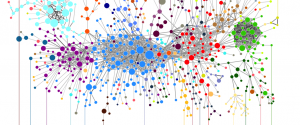
Wen and I are fortunate to have great friends.  A few of them (randomly) ended up giving us gift certificates to Gramercy Tavern when we got married and we finally made it the other night.  As we were basking in the glow of a ridiculously good meal, Wendy mentioned “how did we get here?”  I couldn’t help but think of how, at least for me, a couple of decisions that – at the time – seemed irrelevant have massively shaped who I am today.  (Note that this is not an original notion; complexity scientists call it path dependence).  Here are a couple of those events:

When I was in high school, you applied for three different university programs in descending preference.  I didn’t get into my first pick – computer engineering at the University of Waterloo.  Instead, I did engineering at Queen’s.  If I’d gone to Waterloo I likely wouldn’t know my current set of friends and almost certainly be married to Wen.  In fact, I’d argue that not getting into Waterloo is the best thing that ever happened to me (and that’s no knock to Waterloo as a school).

When I was at Queen’s every engineer did a common first year and then had to pick a discipline to specialize in over the next three years.  I had no idea what I wanted to do, but knew that I liked computers and math and physics.  Each discipline made a presentation and the Engineering Physics department invited a grad named Kamal Hassan to present.  He talked about how he had studied Eng Phys and learned lots of interesting math/physics/engineering but didn’t want to be an engineer and therefore became a management consultant.  I had no idea what a ‘management consultant’ was, but the program sounded like something interesting so I decided to do Eng Phys.  The training I received there continues to help me on a daily basis.  (And, in a weird twist of fate, I ended up becoming a consultant like Kamal and, freakishly, ended up at the same business school he went to)

After my 2nd year of school, I went overseas to London on a work exchange program.  There was a central organization that helped you find a job.  A list of positions were posted; you applied; and if you were to be interviewed, a notice was placed for you in a book (this was pre-cellphones).  This book had a very odd structure.  There were tabbed pages (by students’ last names), but the tabs weren’t rigid and you could open the book but it would be collapsing under its own weight if your last name started with a “w”.

One morning I went to check if I had any interviews and I had one-for a 150 quid/week job at Merrill Lynch. However, due to the collapsing book, I missed one for a 250/week at some publishing company. When I found out I missed out on a job that paid 66% more I was crushed (and I spent the summer living in pernury) – but years later I was  in a job interview and saw “Merrill Lynch” circled on my CV and knew that it had been worth it (if you ever meet me, ask me about that job at Merrill).

Finally, I didn’t get into any of the American grad schools I applied to.  Instead, I ended up at INSEAD.  Again, I met some truly unique people who I otherwise would not know.  More importantly, I got a special chance to work with a serial investor and startup in Silicon Valley.  This gave me the confidence to strike out on my own after school, and while that business wasn’t a success, it directly led to me getting my current job.

All of which led to us having dinner at Gramercy Tavern.  I don’t pretent that the only reason I was able to have dinner there was because of the decisions made above (after all, there are an infinite number of paths that could have led to me eating there), but at least I know which points in my life have made the biggest impact.

And as for the meal.  It was delicious.  The appetizer was a lamb papardelle with olives, lemon confit and swiss chard.

This was followed by venison loin and sausage in a Bourbon sauce and with a potato pancake:

We quaffed it down with probably the best bottle of wine I’ve ever have – a 2001 bottle of Oddero Barolo:

Finally, they gave us a little amuse bouche for the next morning – a piece of cocount cake with pear inside:

Simple is the New Complex

Comments Off

This weekend I walked into a gallery on 21st street and saw this sculpture:

Fan Sculpture

This photo captures the components of the system, but not the dynamics of it.  Basically, you’re looking at two fans facing each other and connected by four pieces of fishing line.  Around the fishing line are wrapped two circular streamers of magnetic tape.

This is fundamentally a simple system – the fans provide continuous input – but the outcome is unbelievably complex.  The two streamers bounce back and forth between the two fans.  At time they appear to stand still and then wildly gyrate in a new direction.  At no time can you predict where they are going to go next, nor do they ever take the same path twice.

This art installation is a fantastic visual example of what is talked about in a recent paper, The (Unfortunate) Complexity of the Economy, by Jean-Phillipe Bouchaud.  Bouchaud shreds the notion that our economy can be explained simply by supply and demand.  Instead, he outlines how many of the behaviours we see in our economy (bubbles, markets that never settle on an equilibrium, etc.) can be explained by different physical analogues.  For example, the fans above are an example of a system that is incredibly sensible to the slightest perturbation in its environment, meaning that is constantly and dramatically changing state (sound like the stock market of late ‘08/early ‘09?).  What’s more, the system above is also governed by  few simple actions (fans blow a tape wrapped around strings) yet incredibly complex action resuls (think about many people buying/selling a stock, yet prices gyrate madly).

If you read one academic paper this year, make it this one.

How We Got Here

Comments Off

Two recent articles I read have me thinking about path dependence.  For those who don’t know, path dependence basically means that we (either individuals or institutions) are the sum of historical experiences – history matters.  A corollary is that small events can build up over time to have large historical impacts (read the Wikipedia entry above for the story of VHS vs. Betamax).

The first article comes from the New Yorker and is about how we arrived at the current U.S. healthcare system (The author, Atul Gawande, is a pretty fascinating guy – read his recent NEJM paper on how simple checklists can significantly improve patient outcomes).  The synopsis could be: nobody designed this system, rather many little decisions have now led us to what it is.  This is classic path dependence (and his article calls it out).  Anyone who wants to change the system is going to have to accommodate this and show that their solution is able to deal with all the challenges that got us here in the first place.

The same dialogue is going on right now in the world of finance.  Check out Alan Blinder’s recent article in the New York Times.  He outlines the six retrospectively obvious mistakes that we made to lead us into the current financial crisis we’re in.  This again, is classic path dependence: a few independently made mistakes combines to create one massive mistake that was much great than the sum of its parts.

You might be thinking that path dependence is a bad thing, but that’s not true.  In fact, it can lead to great outcomes.  Before the Euro, one of the reasons that Germany consistently had a high standard of living was the Bundesbank’s focus on low inflation.  They were adamant about keeping inflation low as the Bundesbank’s early governors had lived through the hyperinflation of the Weimar Republic and were obsessed with making sure that it never happened again.

Just Say No

Comments Off

As I write this, a bailout for the U.S. automakers is winding its way through Congress.  The House has approved it; the Senate looks like it might vote against it.  An auto bailout elicits fierce passions: some people have no sympathy to Detroit due to decades of mismanagement; others claim a car company failure will unleash a domino effect – plus, hey, it’s a helluva lot less money than those bankers got.

I have to admit, that I fall a little closer to the first camp.  I’m stunned that these giants have been able to mismanage themselves for so long.  Let’s be clear: this ‘crisis’ has been a long time coming.  Here’s an interesting opinion on how bizarre incentives caused them to lose focus on building the right set of cars.  In fact, there’s no longer “one cause” for their decline: they’ve allowed the cancer to spread all through their business (failure to innovate; focus on financial return, not the consumer; weak boards, etc.).

Chrysler and GM are facing two imminent realities: bankruptcy or bailout.  Bankruptcy is not such a bad option.  If they enter into a prepackaged bankruptcy they can restructure their operations and avoid a liquidation.  A breakup is almost certain (goodbye Pontiac), but there’s a decent underlying core business; the companies just need to get their cost structure and balance sheet back in line with their expected revenue/cash flow.

However, lots of people are saying that a bankruptcy would be a disaster.  It would lead to millions of jobs lost and a domino effect as suppliers shut down and in turn economically devastated the towns they were located in.

Unfortunately, either way, there are going to be a lot of job cuts, so neither scenario is going to avoid those.  More importantly, let’s test the domino hypothesis.  Imagine Chrysler is liquidated.  No more Dodge, so no more need for the suppliers.  So they go bankrupt and liquidate.

Except they don’t.  Some actually sell to other companies, so they don’t go bankrupt.  Some definitely do, but automotive manufacturing isn’t that big a piece of the economy, so they don’t really take anyone else down with them.

The big group that suffers in this scenario are the people who live in one factory towns where the local factory shuts down: those towns aren’t coming back.  However, it’s not clear that anything is going to sustain small towns, so we’re really just delaying the inevitable.  There’s a bit of a cold calculus here, but this is why we have social programs like job retraining and Social Security; to handle transitions like this.

Contrast this with the banking sector.  What happens when a bank fails?  Here’s a quote from the New Yorker, interviewing a Fed official:

“If Bear had failed,” the senior official went on, “all these money market funds, instead of getting their money back on Monday morning, would have found themselves with all kinds of illiquid collateral, including C.D.O.’s”-collateralized debt obligations-”and god knows what else. It would have caused a run on the entire market. That, in turn, would have made it impossible for other investment banks to fund themselves.”

Here’s the quote in English.  Trillions of dollars are held by money market funds.  They extend overnight loans to investment banks and businesses so that they can function (this is what most people don’t realize: most major corporations run on credit).  If a bank goes bankrupt, the money market fund is left with whatever collateral they bank posted – substantially less valuable, and a heckuva lot less liquid – than the cash they had before.

So what do they do?  They stop lending money overnight and instead buy Treasury Bills.  Check out The Giant Pool of Money to hear it direct from ServiceMaster’s CFO.

This means that one bank went bankrupt and nobody in the entire economy can borrow money.  Suddenly otherwise healthy companies start to go bankrupt or stop investing simply because no one will lend them money anymore at reasonable rates.

That’s a wildly different scenario from a GM or Chrysler bankruptcy.  It’s an example of a tightly coupled complex system: a failure can quickly spread through the system.  And that, in a nutshell, is why the banks are getting trillions of dollars whereas the automakers will be lucky to get a billion.  (And the bankers are also going to get a lot of regulation as people have realized that they were allowed to build a much too fragile, complex system).

Emerging Complexity

Comments Off

One of the most fascinating scientific developments of the past 20 years has been the emergence of the field of complexity.  With the advent of computers, scientists can now model massively complex systems – many of which tend to form from remarkably simple interactions.

A case in point was revealed in a New York Times article on cellphone tracking.  The article summarized a recent letter to Nature magazine, understanding individual human mobility patterns (PDF).  Previous studies of human mobility had used the sighting of banknotes in the same geography (via Where’s George) as a proxy for human mobility.  The conclusion: humanity’s movement was random, following a fat-tailed Levy distribution (a lot of movements of short distances but more long distance movements than you’d expect).

However, the new study actually tracked people’s movements based upon their cellphones (data was anonymized and from a European provider who is required by law to track).  What’s the new conclusion: humans don’t actually travel too far on average and our movements are actually highly predictable (Not too surprising given how much of your time is spent at work or home).

How do you reconcile the random movement of money with the predictable movement of humans?  Simple “dollar bills diffuse, but humans do not” – the dollar bills do not travel with each human daily, rather are passed on.  As a result a bunch of humans who do very predictable things can cause apparently random patterns to emerge in the movement of money.  This is a classic example of complexity: a series of simple actions create a ridiculously complex pattern at an aggregate level.

Fascinating science and kind of makes me want to be an undergrad again.